


Is It True Paradise Valley’s Streets & Roads Have No Lights?
Paradise Valley After Dark
Drive through Paradise Valley after sunset, and you'll notice something unusual. Many residential roads have little or no conventional street lighting. Large homes sit behind mature landscaping, long driveways disappear into the shadows, and nearby mountains become dark silhouettes against the night sky. It's a noticeable contrast to the brighter streets found throughout much of Greater Phoenix.
And yes, it's intentional. Paradise Valley has long placed considerable importance on preserving its desert character, natural scenery, and dark skies. But the idea that the entire town has absolutely no lights? Not quite. Traffic signals still operate at major intersections, and some public lighting infrastructure exists. The real distinction involves conventional streetlights along residential roads.
Quick Points
- Many residential streets lack conventional overhead lighting.
- Traffic signals still operate at major intersections.
- Town policies emphasize preserving dark skies.
- Residential exterior lighting is regulated.
- Nighttime conditions can influence property preferences.
Are Paradise Valley's Roads Really That Dark?
In many neighborhoods, absolutely. You won't necessarily find rows of streetlamps illuminating the road every few hundred feet. Some areas become remarkably dark after sunset, particularly where substantial homesites, mature vegetation, and deep setbacks separate residences from passing traffic.
Yet there's an important distinction. Paradise Valley isn't a town without traffic signals, electricity, or exterior lighting. Its approach simply differs from the more conventional suburban model, where continuous streetlighting may be common along residential streets.
The town's Visually Significant Corridor Master Plan addresses the appearance of important roadways, particularly Lincoln Drive and Tatum Boulevard. Lighting is one element of a broader streetscape design that also considers landscaping, signage, and the town's visual character.
And the appearance changes considerably from one street to another. Some properties are nearly concealed by tall landscape walls and mature trees. Others provide open views toward Camelback Mountain or Mummy Mountain. Homes near intersections and resort developments may receive more ambient illumination than those on secluded residential roads.
Big difference.
A property's nighttime appearance can reveal details that daylight conceals. The distance between a residence and the street, the amount of surrounding vegetation, and the placement of exterior lighting can all affect what someone sees after sunset. Two homes located relatively close to one another may have remarkably different nighttime settings.
Also Read: What Is The Difference Between Scottsdale & Paradise Valley?
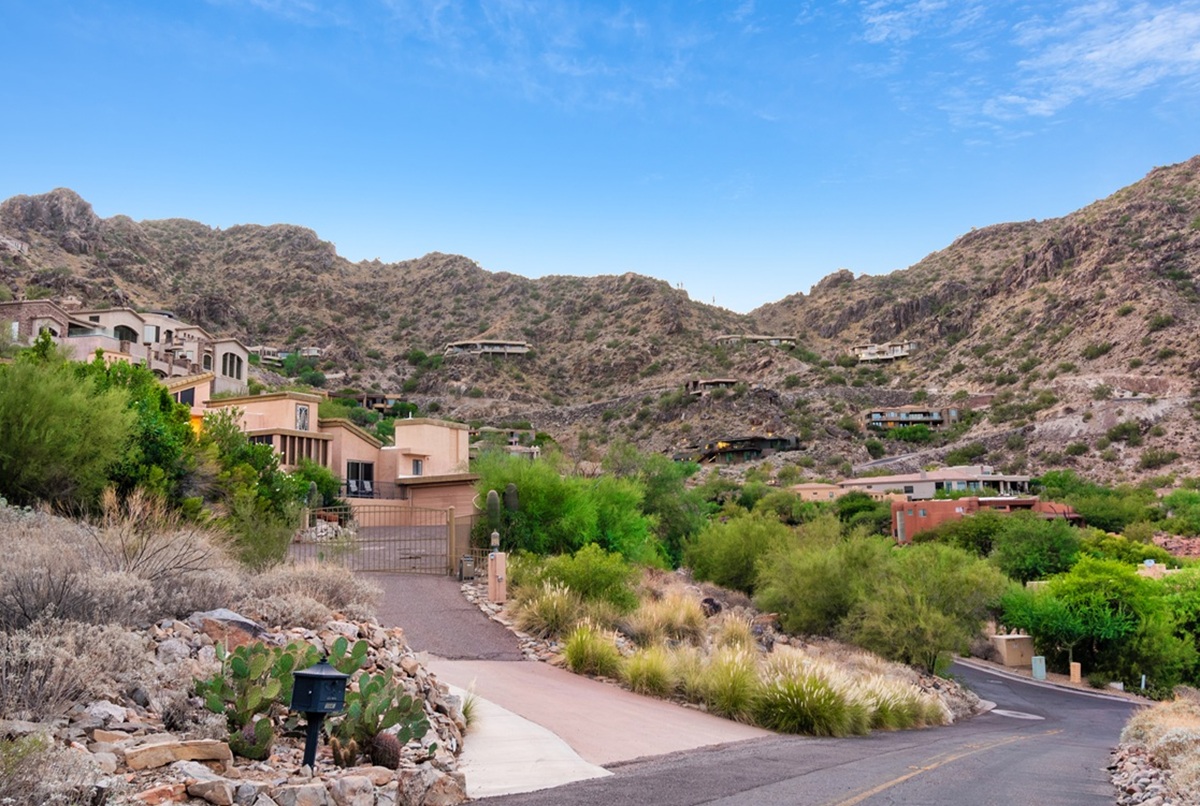
Dark Skies Are Part Of The Town's Identity
Paradise Valley's approach to lighting involves more than the absence of traditional streetlamps. It reflects decades of planning decisions intended to preserve the community's residential character and natural surroundings.
The town's 2022 General Plan identifies dark night skies, open space, mountain scenery, and the preservation of a primarily one-acre residential community among its guiding priorities. These aren't unrelated ideas. Together, they influence how Paradise Valley looks and feels.
Consider what happens when outdoor lighting becomes excessive. Bright fixtures can spill beyond property boundaries, create glare, and interfere with views of the night sky. A carefully illuminated entrance is one thing. A property that floods its surroundings with powerful lighting is another.
The objective isn't complete darkness. Paradise Valley regulates outdoor illumination while recognizing legitimate needs for access, security, and outdoor living. Different requirements may apply to flatland and designated hillside properties.
That distinction matters when considering renovations. A homeowner may want additional lighting around a motor court, along a driveway, or beneath a covered patio. The installation should serve its intended purpose without creating unnecessary glare or conflicting with applicable Town requirements.
Good design matters here. A restrained lighting plan can complement sophisticated architecture without making the entire property look like a commercial parking lot.
Why Some Homeowners Appreciate Darker Streets
There's something distinctive about approaching a luxury residence without continuous overhead lighting along the road. The property's landscaping becomes part of the nighttime setting, architectural lighting stands out differently, and nearby mountains may appear more prominent against the sky.
Some people genuinely appreciate that atmosphere.
Not everyone will. But for those who favor a more restrained residential setting, limited streetlighting may contribute to the town's appeal. The effect can be especially noticeable on larger properties where substantial setbacks and mature vegetation create visual separation from the roadway.
A few characteristics stand out:
- Night Sky Visibility: Less artificial light can improve viewing conditions.
- Mountain Silhouettes: Natural landforms remain prominent after sunset.
- Visual Simplicity: Fewer streetlamps interrupt certain residential views.
- Architectural Character: Carefully directed lighting highlights individual homes.
- Landscape Design: Mature trees and vegetation remain central to the setting.
These characteristics aren't uniform throughout Paradise Valley. Properties near major intersections, resorts, and neighboring municipalities can receive considerably more ambient light. And reduced streetlighting shouldn't be mistaken for guaranteed privacy.
Still, the overall visual character can be striking. A thoughtfully illuminated residence surrounded by darker landscaping may look quite different from the same house during the afternoon.
That's part of the attraction. For certain buyers, the nighttime setting contributes to their impression of the property almost as much as the architecture itself. For others, it may take some getting used to. Neither reaction is unusual, and both deserve consideration when evaluating a property.
Also Read: The Appeal Of Deeper Setbacks At Paradise Valley Estates
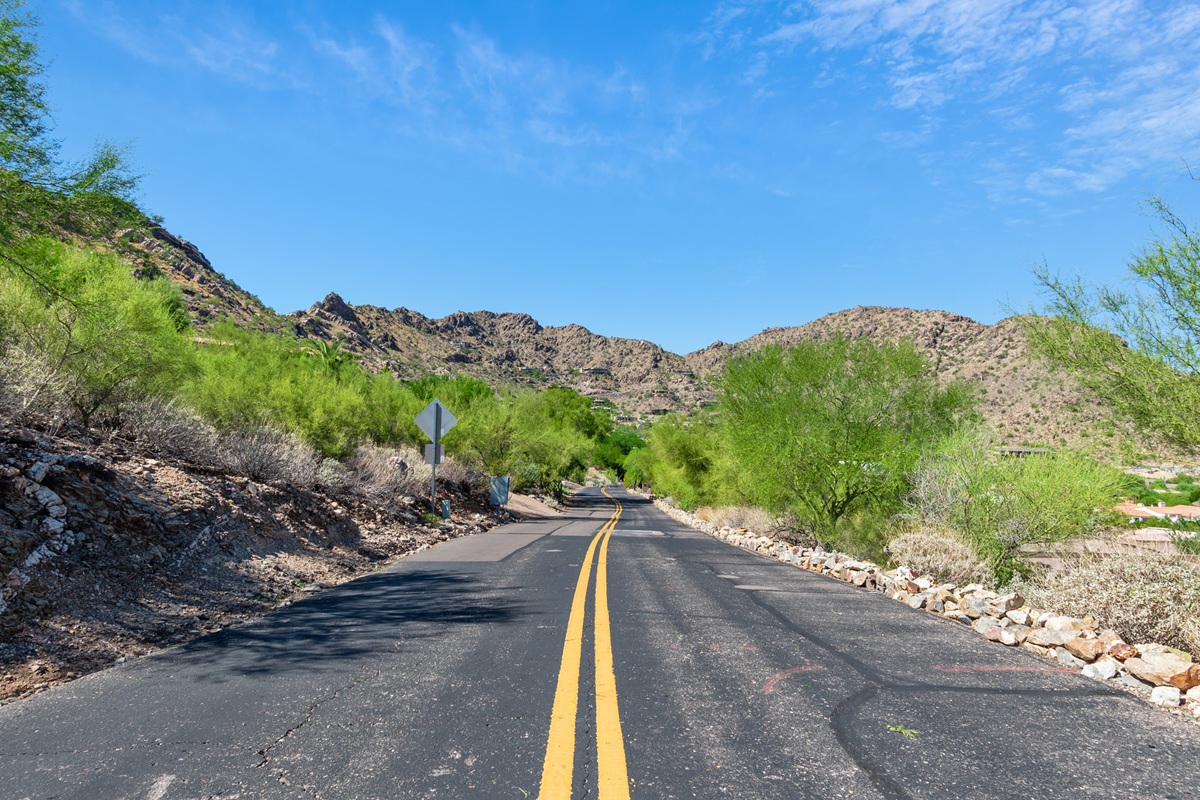
A Home Can Feel Completely Different After Sunset
Picture a large contemporary residence with expansive windows, substantial landscaping, and a long driveway. During the afternoon, everything looks straightforward. The entrance is easy to identify, the landscaping frames the architecture, and the motor court receives plenty of natural light.
Now visit at nine in the evening.
The relationship between the home and its surroundings may feel entirely different. Trees conceal portions of the driveway, exterior lighting becomes more noticeable, and the public road may provide very little illumination. A beautifully designed entrance might still be difficult for an unfamiliar visitor to identify.
Nighttime usability deserves attention, particularly on properties with extended driveways, private gates, or multiple buildings.
Consider a home with a detached guesthouse and separate garage structures. Lighting may need to serve several areas without creating excessive brightness across the entire homesite. A small change in fixture placement can affect both appearance and function.
And terrain adds another consideration. Hillside properties can have winding approaches, elevation changes, and vegetation that influence nighttime visibility. Flatland properties may have simpler access arrangements but still require thoughtful driveway and entrance lighting.
The question isn't whether a home looks impressive after dark. It's whether its lighting arrangement works for the people using it.
Why Others May Prefer More Illumination
Not everyone considers darker streets an advantage. Someone accustomed to a brightly illuminated neighborhood may find Paradise Valley's nighttime setting unfamiliar, even when the residence itself has extensive exterior lighting. The contrast can be considerable, particularly for someone relocating from a community where most residential roads have regularly spaced streetlamps.
That's understandable.
A delivery driver may have difficulty identifying an address. Visitors arriving for the first time might overlook a driveway entrance. Even a beautifully designed property can present practical inconveniences when the surrounding road receives little illumination.
And personal preferences differ. Some homeowners appreciate a darker setting, while others favor greater visibility around their entrances, garages, and outdoor spaces.
Here are several considerations worth evaluating:
- Address Visibility: Is the property easy to identify after dark?
- Driveway Access: Can visitors locate the entrance?
- Road Layout: Are curves or limited sightlines present?
- Landscape Growth: Do trees obscure existing fixtures?
- Outdoor Areas: Does the lighting support intended activities?
- Overall Preference: Does the setting fit daily routines?
A home might have an elaborate illuminated motor court while the adjoining public road remains relatively dark. Those are two different things, and both can influence how the property feels.
The tradeoff is real. Limited streetlighting may contribute to Paradise Valley's character, but it can also require more attention to entrances, wayfinding, and exterior design.
Neither preference is inherently better. What matters is how the actual property functions, rather than whether its surroundings match someone's initial expectations. A nighttime visit can reveal practical details that might otherwise remain unnoticed until after closing.
Also Read: Can You Move A Driveway On A Paradise Valley Property?
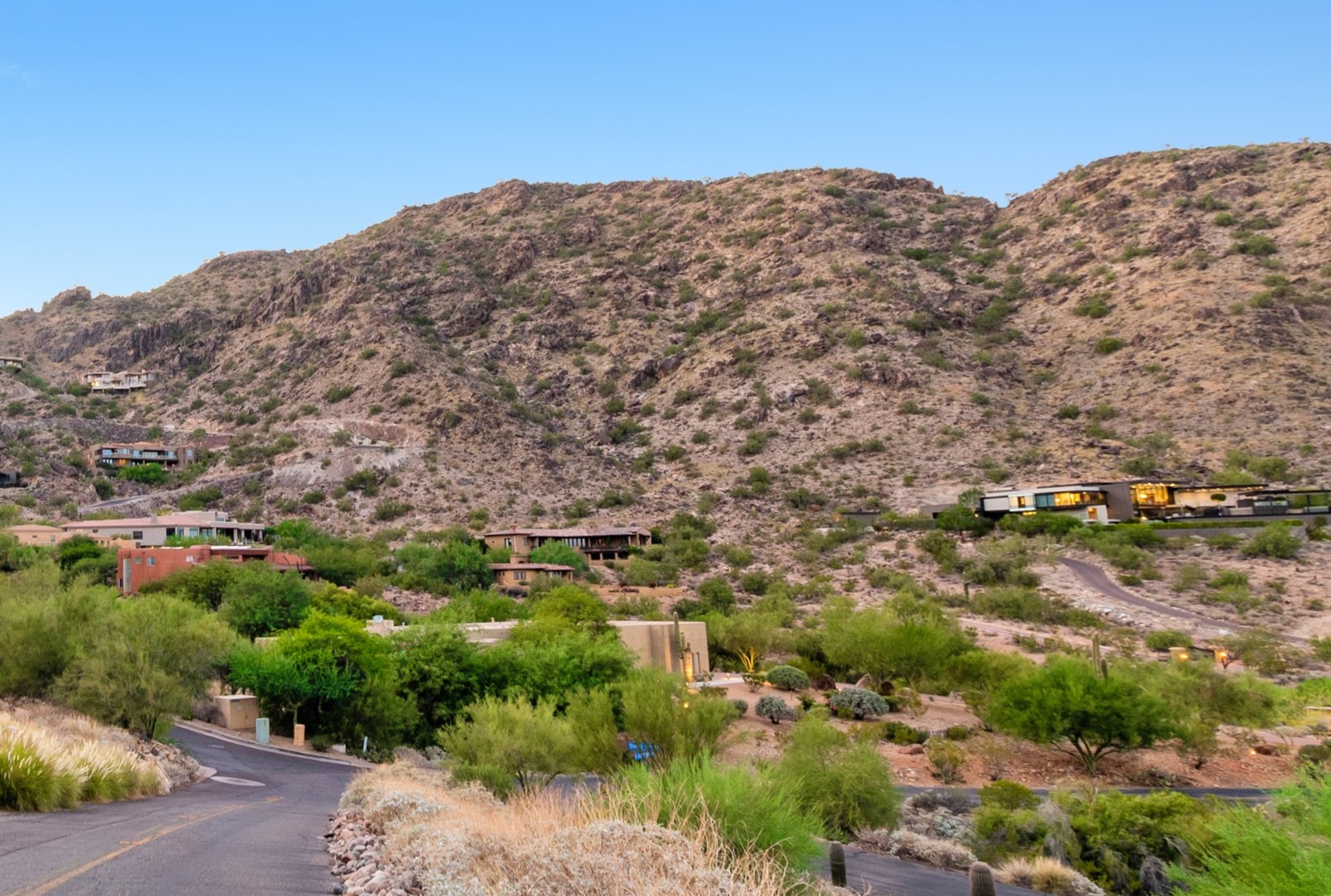
Can Homeowners Install Additional Exterior Lighting?
Potentially. However, the proposed installation needs to comply with the regulations applicable to the property.
Paradise Valley addresses outdoor lighting through its zoning requirements, including Section 1023 for non-hillside residential properties and additional regulations under Article XXII for applicable hillside development.
The Town's hillside development regulations specifically address limiting exterior illumination to preserve dark skies and reduce unnecessary glare. The requirements distinguish between different types of lighting and account for the particular conditions of hillside properties.
For homeowners, that means having a large lot doesn't automatically provide unlimited freedom to illuminate it.
Suppose someone purchases an older Paradise Valley home and plans a substantial landscape renovation. The new design might include driveway lighting, illuminated architectural features, and additional fixtures around outdoor entertaining areas.
Those improvements could be appealing. But before installation, the owner should confirm which fixtures, locations, and illumination levels are permitted. The Town's Permits and Handouts page provides information about relevant applications, including electrical work.
Existing fixtures deserve attention, too. A lighting arrangement installed years ago doesn't necessarily establish what can be added or modified under current requirements. The same applies when replacing older landscape lights with newer fixtures that produce different levels of illumination.
The better approach is to coordinate the design with qualified professionals and verify the applicable rules before committing to an expensive installation.
What Should Buyers Look For?
A daytime showing is useful for evaluating architecture, landscaping, floor plans, and views. But it doesn't tell the entire story about a home's nighttime setting.
At WLH, our boutique brokerage of Arizona real estate agents recognizes that a luxury property needs to be evaluated beyond its appearance in listing photographs. The surrounding roads, driveway configuration, outdoor illumination, and relationship to neighboring properties can all influence how someone uses the residence.
One especially useful approach is to compare the property at different times of day. Morning conditions reveal natural light from one direction. Afternoon sunlight changes the appearance of outdoor areas. And an evening visit can show how exterior lighting works once the surrounding landscape becomes dark.
There's another detail. Not every property with a Paradise Valley mailing address sits within the incorporated Town of Paradise Valley. Jurisdiction should be confirmed before assuming that Town-specific lighting regulations apply.
The property's individual setting matters just as much. A residence along Lincoln Drive may receive a different level of surrounding illumination than a home located on a secluded residential street near Mummy Mountain.
These aren't minor distinctions. They can affect everything from the appearance of a driveway entrance to the atmosphere around an outdoor dining area. A home that looks exceptional during the day should be evaluated with equal attention after sunset.
A Different Approach To Residential Living
Paradise Valley's nighttime character isn't an accident. It reflects an approach to development that places considerable importance on natural scenery, substantial residential properties, and restrained exterior illumination.
Some people love it. Others may prefer brighter neighborhood streets. Both reactions make sense, and neither can be determined from a listing description.
So, is it true that Paradise Valley's streets and roads have no lights?
Not entirely. Many residential roads lack conventional streetlights, but traffic signals, certain public lighting installations, and private exterior fixtures remain part of the town's landscape.
The distinction is important because it explains something about Paradise Valley's identity. The community hasn't simply overlooked streetlighting. Its planning philosophy places considerable value on preserving a particular nighttime appearance.
For prospective homeowners, there's a practical way to evaluate that philosophy. Visit the property in daylight, return after sunset, and compare how the surroundings look and function.
The architecture may be the same. The setting can tell a different story.
Also Read: What Things Should I Know Before Moving To Paradise Valley?


