


Is It A Good Time To Buy A High-End Home In Paradise Valley?
Is It A Good Time To Buy A High-End Home In Paradise Valley?
As of August 2026, the answer is yes for some buyers, with a big condition attached. This article uses market information available through August 7, 2026, & the numbers point to a Paradise Valley real estate market where buyers have more time to question an asking price, study the parcel, & compare alternatives. That doesn’t make Paradise Valley cheap. Far from it. The opportunity comes from a slower buying pace & greater negotiating room, not from a collapse in high-end values. Paradise Valley still sits in its own lane inside Greater Phoenix. So, is it a good time to buy a high-end home in Paradise Valley? The property itself needs to answer that question.
Quick Points
- August 2026 gives buyers more negotiating room
- Paradise Valley price statistics require careful reading
- Greater Phoenix investment may support future demand
- Parcel quality can outweigh townwide averages
- Strong properties still command serious money
Also Read: The Most Sought-After Neighborhoods In Paradise Valley
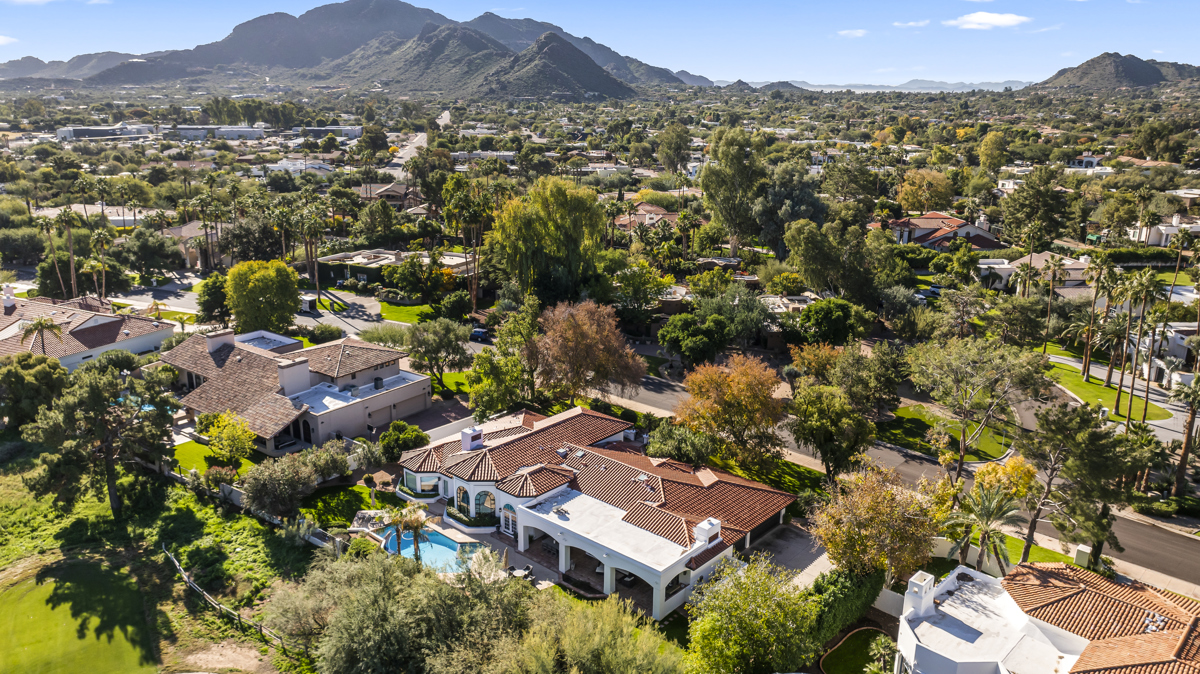
Read The Numbers Before You Read The Mood
Start with the numbers. Do not mix a median sale price with a median list price, & do not treat Zillow’s Home Value Index as a closed-sale average. Zillow’s Paradise Valley town page, updated June 30, 2026, put its ZHVI typical home value at $3,581,537, up 11.2% from one year earlier. The same data showed 196 homes for sale, a June median list price of $4,583,333, 79 median days to pending, & a May median sale price of $3,440,349. Redfin used a different three-month measure ending in May & reported a $4,446,839 median sale price. It placed the average selling period at 91 days, compared with 66 days one year earlier. Realtor.com’s June market report used another data set, showing a $5.5 million median list price, a 95% sale-to-list ratio, 93 median days on market, & 306 active listings. Those differences matter.
- Zillow ZHVI is a modeled value index
- Median sale prices track closed transactions
- Median list prices track seller asks
- Days on market shows selling pace
- Portal methods can shift totals
That’s why one sweeping ‘average Paradise Valley home price’ can be misleading. The sources use different dates, methods, property mixes, & geographic filters. A 2026 custom build can live in a different pricing lane from an older residence whose main value sits in the parcel. Use market statistics as context, then verify live ARMLS data before making an offer.
See Where Buyers Have More Room
The August setup gives patient buyers room to work. Paradise Valley remains expensive, & well-positioned properties can still command strong numbers. Realtor.com’s June measure showed a 95% sale-to-list ratio, meaning the market was no longer behaving like a place where every seller automatically received the asking price. Redfin’s 91-day average selling period also points to more buyer patience than one year earlier. Borrowing costs remain part of the equation. The national 30-year fixed mortgage averaged 6.69% on August 6, 2026, according to reporting on Freddie Mac’s weekly survey. Phoenix data adds another piece, with Realtor.com reporting price cuts on 29% of June listings & a median list price down 5.9% year over year. That Phoenix figure doesn’t define Paradise Valley. It shows price resistance across parts of 'The Valley'.
- Ask about the listing history
- Study previous price reductions
- Compare closed sales first
- Separate trophy sales from your lane
Here’s the other side of the story. A Paradise Valley estate sold for $40.24 million in July 2026, setting a new Arizona residential sale record, according to the Phoenix Business Journal. The transaction was reported as an all-cash purchase. One $40 million sale doesn’t establish the value of the house down the street. It does show that serious capital is still closing at the top of this market.
Also Read: What To Know When Building Or Remodeling In Paradise Valley
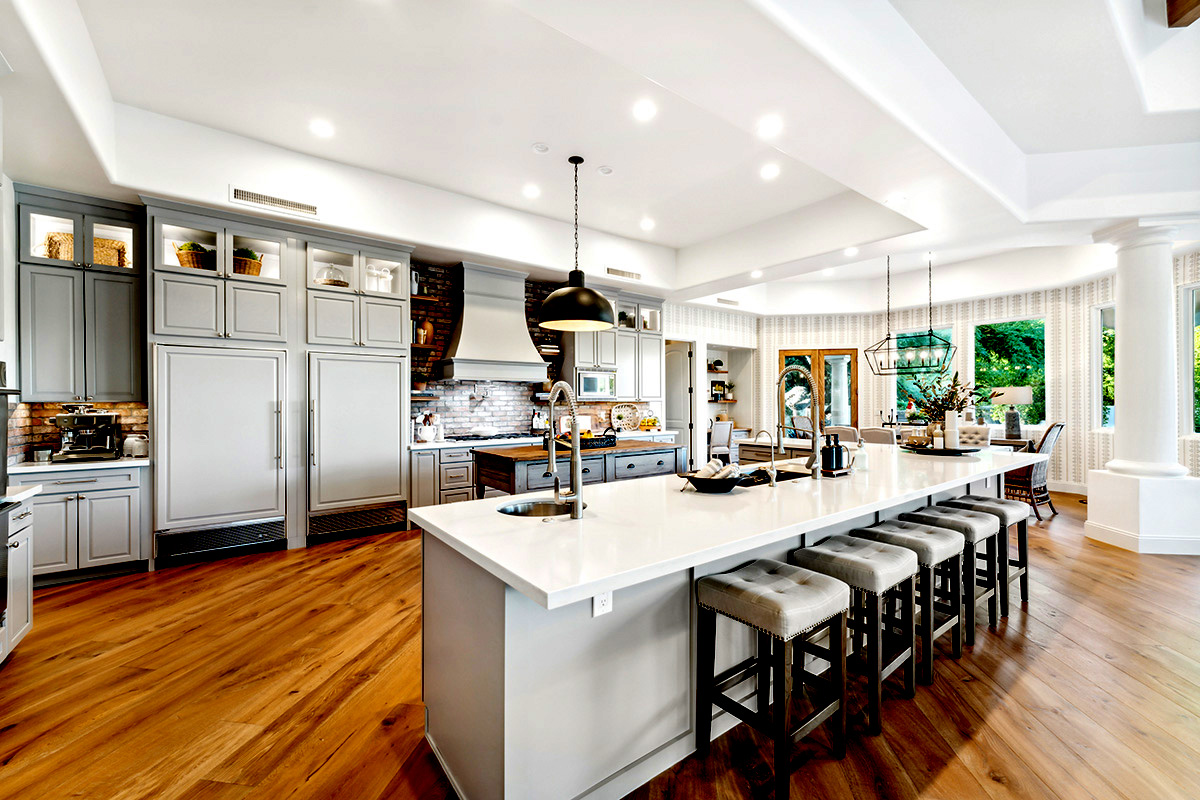
Let The Town’s Land Rules Shape The Case
Paradise Valley’s housing story starts with the ground. The Town says it covers 15.4 square miles & remains predominantly zoned for single-family housing. Its basic town facts also list 9 resorts, 3 golf courses, 4 medical centers, & a development pattern unlike the larger cities around it. The Town’s 2022 General Plan calls for maintaining its primarily one-acre residential character. That plan counted 75.94% of its planning area as single-family residential. It counted only 5.2% as undeveloped or vacant at that time. That 5.2% figure comes from the 2022 planning document, so it should not be treated as an August 2026 vacant-land inventory count. The larger point remains clear. Paradise Valley cannot produce new residential supply the same way a large master-planned area can.
- Lot shape can shift value
- Slope can raise site costs
- Views can change buyer interest
- Setbacks can limit expansion
- Drainage can change build plans
- Existing homes may carry land value
This connects directly with the earlier Paradise Valley pricing article. That piece treated the parcel, topography, construction, & redevelopment case as separate pricing lenses, rather than forcing every property into one price-per-square-foot formula. Buyers need the same discipline. A townwide median cannot tell you what one acre on one street is worth.
Also Read: Is Paradise Valley A Good Place To Retire For Luxury & Privacy?
.
Follow The Growth Outside Town Limits
Look beyond the town boundary for another part of the buying case. Paradise Valley itself remains primarily residential. Much of the economic growth story sits around it in Greater Phoenix. On July 16, 2026, TSMC announced another $100 billion for its Arizona plans, bringing the company’s stated total Arizona commitment to $265 billion. That is the current figure from the City of Phoenix & Arizona Commerce Authority. The expanded plan calls for 10 semiconductor fabs. It also includes two advanced-packaging facilities plus an R&D center. Scottsdale has its own semiconductor investment underway through ASM, which says its new facility near Scottsdale Road south of Loop 101 will house its largest R&D center worldwide. Mayo Clinic adds another major employment node near North Scottsdale through its Phoenix campus, where a $1.9 billion, 1.2-million-square-foot expansion is planned for completion in 2031.
- TSMC’s Arizona plan now totals $265B
- ASM is expanding its Scottsdale operation
- Mayo is adding 1.2 million square feet
- Discovery Oasis spans about 120 acres
- Greater Phoenix keeps attracting capital
Mayo also identifies the nearby 120-acre Discovery Oasis as a biotechnology corridor tied to its Arizona operations. None of these projects guarantees that a Paradise Valley estate will appreciate. That isn’t how real estate works. They do add technical jobs, corporate activity, investment, & business traffic around Greater Phoenix. That can deepen the future buyer pool for high-end housing. Paradise Valley doesn’t need celebrity headlines to make that point. Many buyers with substantial purchasing capacity never become public names.
Buy The House That Wins Its Own Lane
Now get property-specific. A townwide statistic cannot tell you whether one house carries a good number. A new build on a usable acre competes differently from an older residence with redevelopment value. A mountainside property brings another set of questions. Paradise Valley maintains a Hillside Map, & Town materials identify hillside lots through mapped status or a building-pad slope of 10% or greater. That can put grading, drainage, access, disturbance limits, & future construction into the buyer’s review. An existing home may carry value because its current placement would be difficult to reproduce. Replacement cost also fails as a stand-alone resale formula. The cleanest purchase case appears when land, construction, condition, & price support the same number.
- Match flat lots with flat lots
- Match hillside sites with hillside sites
- Separate new builds from remodels
- Check permit history
- Review drainage before planning expansion
- Price renovation before chasing finishes
- Study active competition
This is where patience pays. A property that has been sitting can give you time for inspections, contractor input, permit research, & sharper comp work. A strong house at a supported price can make sense in August 2026. An awkward parcel carrying a trophy ask can fail the same test.
Also Read: Paradise Valley Begins Major Zoning Code Rewrite After Decades
Decide Whether August 2026 Fits You
So, is it a good time to buy a high-end home in Paradise Valley? As of August 2026, the answer is yes, selectively. The case rests on slower selling periods, negotiating room, limited land, & continued investment around Greater Phoenix. A buyer with a multi-year horizon has more reason to focus on property quality than on guessing next month’s mortgage rate. Short-term speculation creates a much harder case at these price levels. Custom construction costs can move. Seller expectations can move too. One record sale can grab attention without changing the value of your target property. Buy the house that survives the comp test.
- Plan around a multi-year hold
- Keep reserves for property work
- Verify live comps before offering
- Walk away from unsupported pricing
Paradise Valley keeps a rare position inside the Arizona real estate market because its residential pattern is hard to duplicate at scale. Mountain sites, acre-oriented zoning, resort properties, custom construction, & access to major Scottsdale and Phoenix employment centers continue to matter. The current market also gives many buyers something they lacked during the fastest years. Time. Use it to compare parcels, question the asking number, inspect the property, & build an offer from evidence.
Also Read: What Should I Expect When Pricing A Home In Paradise Valley?
*Market data changes, & sources may use different dates or methods. Buyers should verify current ARMLS data, property records, zoning, financing, inspections, taxes, & legal matters before acting. This article provides general real estate commentary, not appraisal, legal, tax, or financial advice.


