


What Contingencies Should I Include Buying A Home In Arizona?
What Contingencies Should I Include Buying A Home In Arizona?
Welccome back to LUXE BLOG. As of August 2026, Arizona homebuyers have room to negotiate terms that would have been much harder to get during the frenzy of a few years ago. That matters. Yet Arizona isn’t one housing market. Scottsdale can behave differently from Phoenix. Paradise Valley can play by another set of rules entirely. Flagstaff & Sedona have their own supply patterns, price points, & buyer pools. This article focuses mainly on Greater Phoenix, with extra attention on Scottsdale, Paradise Valley, Phoenix, Tempe, Chandler, & Gilbert.
Quick Points
- Inspection protection still matters
- Financing terms deserve close attention
- Appraisal language can protect your cash
- Seller concessions remain common
- Every property calls for its own strategy
Start With The Contingencies That Protect You
A contingency gives you a defined contractual path when something about the transaction doesn’t work as planned. That may involve the property condition. It may involve your loan. An appraisal can create another decision point. Arizona REALTORS® maintains separate forms covering appraisal issues, buyer contingencies, financing, & other contract matters, so the exact language in your offer matters. You shouldn’t think of contingencies as boxes that automatically go into every offer. Think about the house, your financing, your cash position, & the competition before deciding what belongs in the contract.
- Inspection period
- Loan contingency
- Appraisal protection
- Buyer-property-sale contingency
- Title review rights
- HOA document review
The goal isn’t to stuff an offer with escape clauses. The goal is to protect the issues that could change whether you still want the property or can complete the purchase.
That distinction matters in Arizona because contract deadlines can carry real consequences. Your agent should track those dates from contract acceptance through closing, & you should know what each one means before signing.
Also Read: Why Are So Many People Moving To Arizona? Top Reasons
Give Yourself Room To Inspect The Property
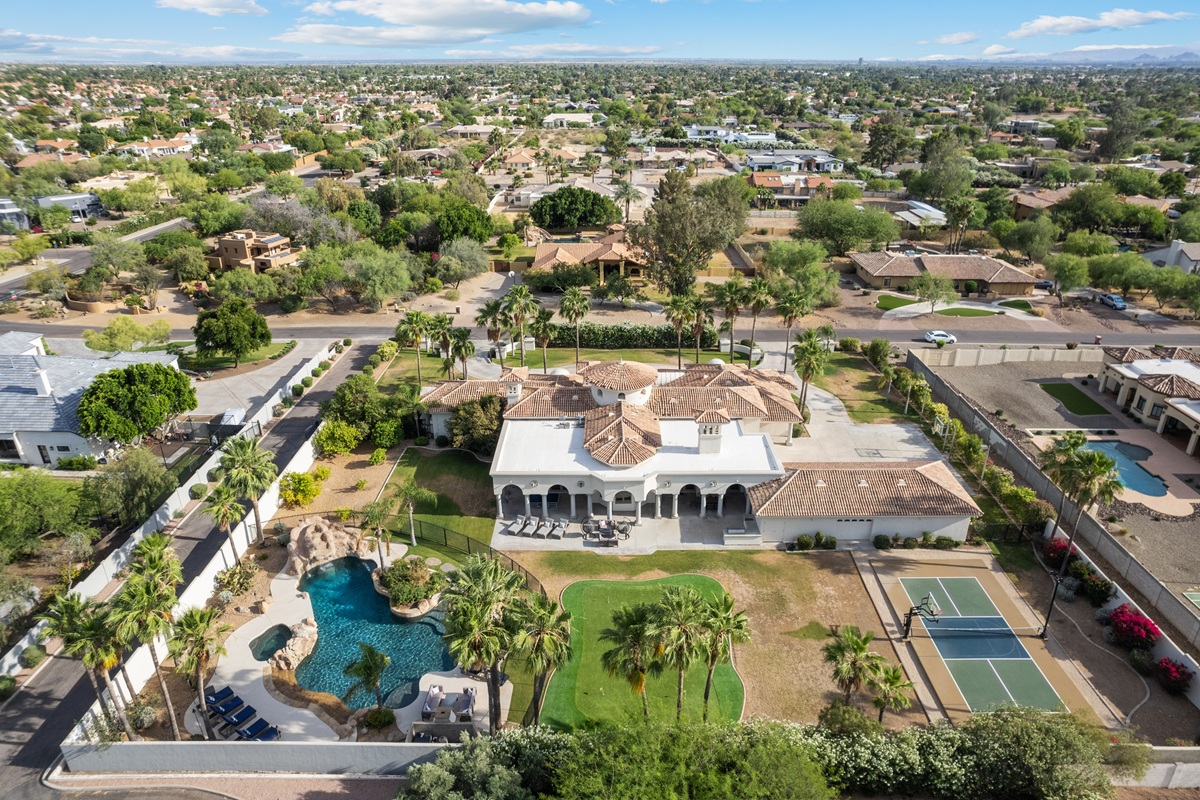
The inspection period remains one of the most useful protections for an Arizona buyer. A 10-day inspection period remains common in Arizona resale transactions, though the number of days can be negotiated. During that window, buyers can investigate the property & decide how they want to proceed under the contract. That can matter in Scottsdale, where one property may have a pool, roof systems, HVAC equipment, extensive landscaping systems, or additions that deserve separate attention. A Paradise Valley estate may call for another level of investigation based on the property itself. A condo in Old Town Scottsdale brings a different list of questions. The inspection strategy should fit the house.
- General home inspection
- Roof evaluation
- HVAC review
- Pool inspection
- Sewer scope
- Termite inspection
- Electrical review
Here’s where buyers sometimes get too aggressive. Shortening an inspection period can make an offer look cleaner, but you still need enough time to get the right people into the property.
A five-day inspection period might work when inspectors are lined up before the offer goes out. Ten days may make more sense on a property that needs added investigation. The number itself isn’t the strategy. The property is.
Know The Difference Between Contingencies & Concessions
These terms get mixed together all the time. They mean different things. A contingency protects a contractual decision or obligation. A seller concession is money or another financial contribution that reduces certain buyer costs. Redfin defines a concession as something a seller provides that reduces the buyer’s purchase costs, such as funds for repairs, closing costs, or a mortgage-rate buydown. This distinction matters a lot in the August 2026 Greater Phoenix market. Buyers are asking for financial help in a large share of transactions.
- Closing-cost credits
- Rate buydowns
- Repair credits
- Prepaid-cost assistance
Here’s a real-world type of scenario. A home is listed at $1.2 million. A buyer offers the full $1.2 million price, then asks the seller for a $20,000 concession toward allowable buyer costs.
That is not the same as offering $1.18 million. The seller, buyer, lender, & agents have to look at the entire package. The seller sees the net proceeds. The lender looks at what the credit can legally cover. The buyer looks at cash needed for closing & the effect that money may have on the loan.
Also Read: What’s The Difference Between A Buyer’s & Listing Agent In AZ?
Buyers Are Getting Concessions Across Greater Phoenix
The numbers show how much the negotiating environment has changed. Redfin reported that 65.6% of Phoenix-area home sales included a seller concession in the three months ending May 2026. A year earlier, that figure was 50.7%. Nationally, the May figure was 46.2%. Greater Phoenix also carried about 3.78 months of housing supply in July 2026, with 23,743 active listings reported in one ARMLS-based market review. Buyers have choices. Sellers know that.
- Credits show up often
- Rate buydowns remain in play
- Repairs can become negotiations
- Older listings invite more discussion
- Price still controls the conversation
That doesn’t mean you should automatically ask every seller for 3%, $20,000, or some other preset number. A concession request has to make sense against the price, days on market, competing properties, seller position, & your financing.
Sometimes $10,000 gets the deal done. Sometimes $20,000 works. Sometimes the seller would rather cut the price. On another property, asking for a large credit could cost you the house.
This is where an agent needs to read the individual listing rather than the Greater Phoenix headline.
Scottsdale & Paradise Valley Need Their Own Strategy
Scottsdale deserves its own analysis because its price points, neighborhoods, & property types cover a wide range. Redfin’s recent data showed Scottsdale homes selling at a median price near $959,000, with homes taking about 68 days to sell over the three months ending June 2026. Its competition data showed the average home selling about 4% below list price. Paradise Valley operated at another level, with a median sale price around $4.2 million over the same broad period. Homes there were taking about 103 days to sell, while Redfin’s competition measure showed average sales about 6% below list. Those numbers don’t tell you what one seller will accept. They tell you why treating every Greater Phoenix offer the same makes little sense.
- Days on market matter
- Price history tells a story
- Property condition changes the ask
- Cash offers shift the discussion
- Luxury sellers have different goals
- Recent comps matter more than headlines
Take North Scottsdale. Redfin put its recent median sale price around $1.25 million, with homes averaging about 69 days on market in the three months ending June 2026. Now compare that with a property that hit the MLS yesterday, has strong recent comps, & already has another interested buyer. Your offer structure may need to tighten.
Then look at a Scottsdale house that has been listed for 90 days after a price reduction. That seller may react very differently to a full-price offer paired with a $20,000 credit.
Same city. Different deal.
Also Read: Is Firing Your Real Estate Agent In The State Of Arizona Doable?
Phoenix, Tempe, Chandler & Gilbert Can Shift Faster
The rest of Greater Phoenix reinforces the same point. Phoenix itself has recently shown more competition than Scottsdale, with Redfin reporting average homes selling around 2% below list. Tempe homes have also been selling around 2% below asking based on recent Redfin competition data. Chandler’s median sale price was around $525,000 in the three months ending June 2026, while Gilbert was around $580,000. None of that means buyers should use one formula across those cities. A house can have more competition than the city-level statistics suggest.
- Phoenix varies by neighborhood
- Tempe can move quickly
- Chandler changes by price band
- Gilbert can draw competition
- Scottsdale varies block by block
Look deeper than the city name. Check days on market. Check price reductions. Study recent closed sales. See what comparable homes are doing. Then structure the contingency periods & concession request around that property.
That’s where negotiation starts.
Protect Your Financing Before Chasing A Credit
Financing contingencies matter because an accepted offer doesn’t mean the loan has cleared every hurdle. Arizona REALTORS® identifies financing contingencies within its residential resale contract materials. Buyers using financing should know what happens if loan approval fails under the contract. They should also know when notices have to be given. Seller concessions must fit the loan program, because a seller can’t simply hand a buyer unlimited cash at closing. Fannie Mae, for example, places financing-concession limits on conventional loans based on occupancy & loan-to-value ratio. Your lender should calculate the usable amount before you build a concession into the offer.
For Fannie Mae principal residences or second homes, current published limits include:
- Over 90% LTV means 3%
- 75.01% to 90% means 6%
- 75% or less means 9%
- Investment property limit is 2%
Those percentages are ceilings under that program, not a recommendation for what you should request from an Arizona seller. Fannie Mae also states that financing concessions can’t exceed the borrower’s applicable closing costs without different underwriting treatment.
VA rules differ. VA currently caps defined seller concessions at 4% of reasonable value, while its rules treat certain customary closing costs separately. Loan type matters. So does how the credit gets written.
Ask your lender what amount you can actually use before negotiating it.
Also Read: How Much Money Does It Cost To Install A New Pool In Arizona?

Keep The Appraisal Contingency On Your Radar
Appraisal protection deserves extra attention when your offer pushes the price or when comparable sales are thin. The current Arizona REALTORS® residential resale contract materials include an appraisal contingency tied to an appraisal acceptable to the lender. That can become important in Scottsdale & Paradise Valley because custom homes can be difficult to compare. One property may have a remodel that changes the buyer’s opinion of value. Another may sit on a lot that doesn’t match nearby sales. The lender still needs its appraisal process to support the loan. Cash buyers have a different decision because financing may not dictate the transaction.
- Know your appraisal language
- Watch contract deadlines
- Review comparable sales
- Discuss appraisal gaps early
- Know your available cash
Suppose you agree to pay $1.2 million. The appraisal comes in at $1.15 million. That $50,000 gap becomes a conversation involving the contract, lender, seller, & buyer.
Maybe the price changes. Maybe the buyer brings additional cash. Maybe another contractual option applies. What happens depends on the language you signed.
Don’t wait for the appraisal report to learn what your contract says.
A Home-Sale Contingency Depends On The Seller
Some buyers need to sell another property before purchasing their next Arizona home. Arizona REALTORS® provides a Buyer Contingency Addendum for situations that call for added contractual protection. Whether a seller accepts that structure depends heavily on the property & market at that moment. A Scottsdale seller with a listing that has sat for months may listen. A new listing with competing interest may not. The buyer’s existing home also matters. A property already under contract presents a different proposition from one that hasn’t hit the market.
- Current home status matters
- Closing dates need coordination
- Seller motivation changes the response
- Competition affects acceptance
This is another reason an Arizona-wide rule doesn’t work. Flagstaff won’t always trade like Scottsdale. Sedona won’t always trade like Phoenix. Paradise Valley won’t trade like Gilbert.
You have to write for the market in front of you.
Also Read: Is Arizona A Good Place To Live?
Decide What To Ask For Before You Write
An offer should tell one financial story. Don’t pick the price first, then tack on every possible request. Look at what the seller receives after concessions. Look at what you need for closing. Think about which contingency protections matter for this property. Review how long the home has been listed. Then decide where you want to push.
- Price
- Seller credit
- Inspection timing
- Appraisal terms
- Financing terms
- Closing date
For example, a full-price offer with a $20,000 seller concession can make sense on one $1.2 million Scottsdale property. A $1.18 million offer with no credit could make more sense on another. The seller may view those offers differently based on net proceeds & contract terms.
There is no universal concession number for August 2026. The useful takeaway is that concessions are common enough in Greater Phoenix that buyers should discuss them before writing an offer. With 65.6% of Phoenix-area sales in Redfin’s May measurement including a concession, asking the question is reasonable.
Build The Offer Around The House
Arizona buyers have more room to negotiate than they had during the bidding-war years, yet the market still changes from property to property. Greater Phoenix isn’t one giant negotiation zone. Scottsdale has its own patterns. Paradise Valley carries another price structure. Phoenix, Tempe, Chandler, & Gilbert can move differently based on the neighborhood, price band, property condition, & competing inventory. That means your contingencies should protect the issues that matter to your purchase. Your concession request should solve a financial need without weakening the offer more than necessary.
- Protect your inspection rights
- Review financing language
- Watch the appraisal
- Study seller motivation
- Calculate concessions with your lender
As of August 2026, buyers have bargaining room in many Arizona transactions. Use it with purpose. A strong offer doesn’t mean giving away every protection, & a buyer-friendly market doesn’t mean asking for every possible concession.
Read the property. Read the seller. Know your contract. Then write the offer around the deal sitting in front of you.
Also Read: What Are The Five Cs The State Of Arizona Is Most Known For?
*Real estate contracts, lending rules, & transaction terms vary. Buyers should review their specific contract with their real estate professional, lender, & legal counsel when legal advice is needed.


