


The Real Price Range Of Paradise Valley Fine Home Listings
The Many Price Points Of PV
In November 2026 (when we wrote this blog), there was a Paradise Valley residence was on the market for $55 million. Its asking price exceeded $2,300 per square foot. Remarkable. Yet elsewhere in town, buyers can find considerably less expensive homes, including properties with established landscaping, swimming pools, and substantial acreage.
What accounts for such an enormous difference? Quite a bit. The Paradise Valley housing market contains several distinct segments, where geography, land characteristics, construction quality, and architectural preferences can influence what someone is willing to pay.
Quick Points
- Paradise Valley has several luxury price segments
- Asking prices can exceed $50 million
- Land can represent substantial property value
- New construction influences purchasing decisions
- Mountain settings introduce different considerations
- Price per square foot has limitations
From Millions To Tens Of Millions
How expensive is Paradise Valley? The answer depends partly on which portion of the market you're looking at. A published analysis of 336 single-family transactions reported through ARMLS between November 2025 and November 2026 showed a median sale price of approx. $4.3 million.
The reported sales ranged from just under $1.1 million to more than $40.2 million. That's quite a spread for such a geographically compact market.
Consider several broad purchasing categories:
- $1–3 million: Established homes, smaller residences, and potential renovation opportunities.
- $3–5 million: Substantial custom homes, renovated properties, and valuable homesites.
- $5–10 million: Higher-end construction, extensive improvements, and select newer residences.
- $10–20 million: Large custom homes with sophisticated architecture and extensive amenities.
- $20 million and above: Exceptional properties with increasingly specialized features.
These are general shopping categories, not fixed valuation brackets. A smaller newly constructed home may command considerably more than a larger residence built decades earlier. And some properties cross these categories for reasons that have little to do with the house itself.
Also Read: Paradise Valley Real Estate Market Update For October 2026
Different Parts Of Paradise Valley
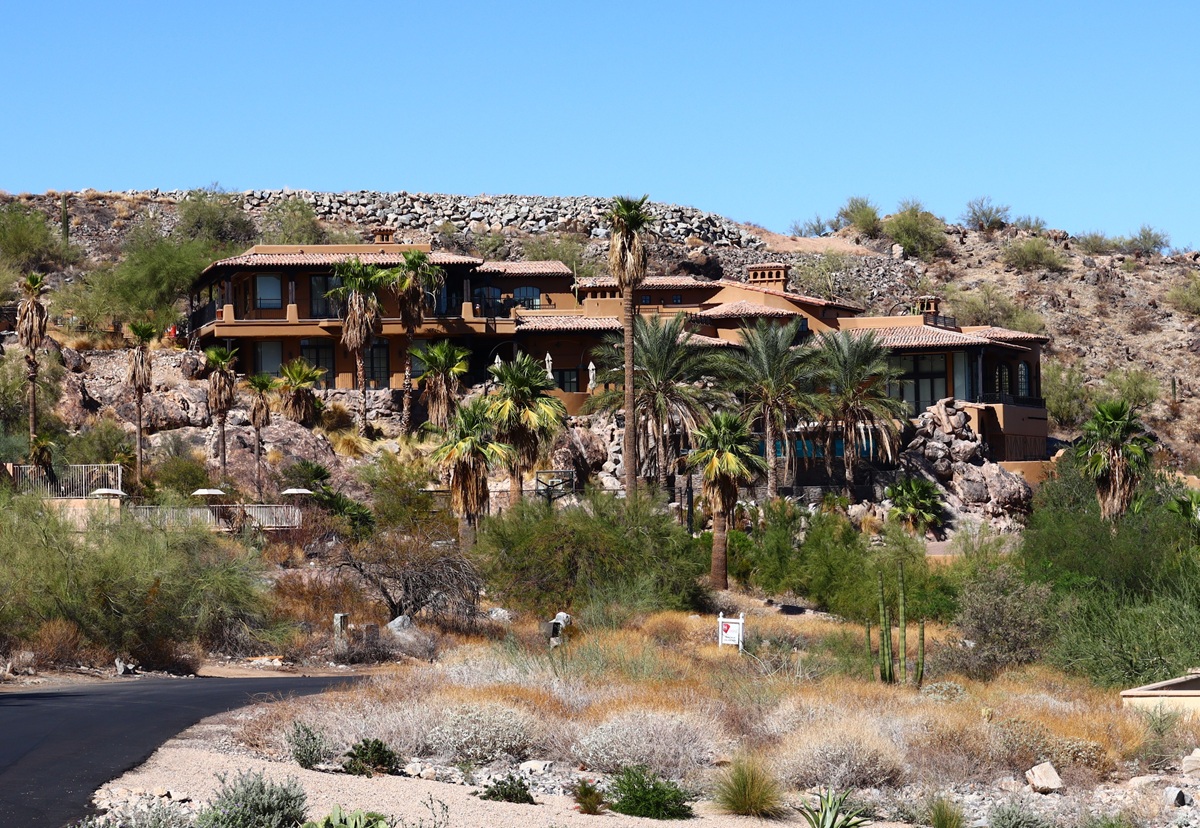
Paradise Valley sits between Phoenix and Scottsdale, with several prominent mountain formations influencing its physical character. Within the town, however, residential settings vary considerably.
The northern portion includes relatively level residential areas and properties near the Camelback Golf Club. Around Mummy Mountain, the terrain becomes more varied, with elevated homesites offering different perspectives of the surrounding desert and city.
Western Paradise Valley includes hillside settings near the Phoenix Mountains Preserve, including communities such as Clearwater Hills. The southwestern portion, near the Hermosa Inn, contains another collection of established residential properties.
Farther south, homes near Camelback Mountain can command attention for their proximity to the mountain itself. Some capture close-up views of its distinctive rock formations, while others overlook portions of Greater Phoenix.
Then there's the eastern side of town, near Scottsdale Road and The Ritz-Carlton Residences, where resort-oriented real estate introduces another type of ownership.
Each setting has its own appeal. Even properties located a few streets apart can offer remarkably different surroundings, elevations, and architectural possibilities.
Sometimes It's All About The Dirt
Picture a well-maintained Paradise Valley home with several bedrooms, a swimming pool, mature trees, and a generous backyard.
Someone pays millions for it.
The moving trucks never arrive.
Instead, architectural plans are drawn up. Demolition equipment eventually appears.
Why would someone purchase a perfectly functional multi-million-dollar home only to remove it? Because the underlying land may be what attracted them in the first place.
Paradise Valley's established residential footprint limits opportunities to create entirely new homesites. The town's 2022 General Plan emphasizes maintaining its predominantly one-acre residential character, making existing properties an important source of redevelopment opportunities.
And demolition candidates aren't necessarily ancient. A residence built relatively recently may still lack the architectural style, ceiling heights, garage configuration, or indoor-outdoor arrangement desired by its next owner.
The structure may have considerable remaining useful life. Its replacement can be a matter of personal preference and the value placed on its location.
Also Read: What To Know When Building Or Remodeling In Paradise Valley
What New Construction Brings
Luxury construction has changed considerably over the past several decades. So have floor plans.
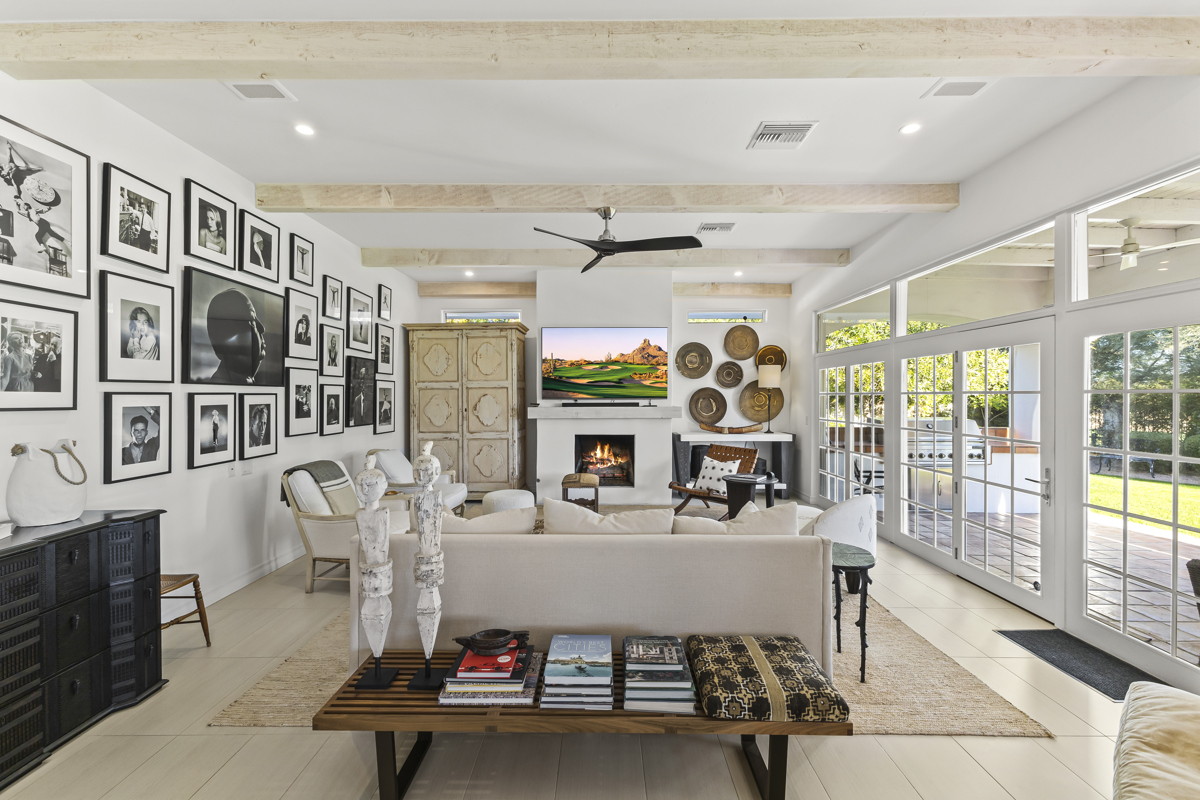
Many contemporary designs incorporate expansive glass systems, taller interior spaces, concealed preparation kitchens, integrated lighting controls, and sophisticated climate systems. Outdoor areas may function as extensions of the main living spaces.
Garages have changed, too. A conventional three-car garage may have served the original homeowner perfectly well. Someone purchasing a property today might want space for a car collection, charging equipment, workshop facilities, or additional vehicle storage.
Some features found in newer high-end Paradise Valley homes include:
- Retractable glass wall systems
- Dedicated wellness rooms
- Temperature-controlled wine storage
- Detached guest residences
- Specialized collector garages
- Extensive home automation
- Secondary preparation kitchens
- Interior courtyards
These improvements can influence the asking price. But their contribution to resale value depends on workmanship, functionality, and buyer demand.
An exceptionally well-maintained older custom home may offer attractive purchasing economics compared with the cost of acquiring land and commissioning a similar residence today.
Newer isn't automatically better. Construction quality matters.
Hillside Homes & Level Properties
One of the more interesting comparisons in Paradise Valley involves hillside homes and properties situated on relatively flat land.
A mountainside residence might capture views extending across the Phoenix metropolitan area. At night, thousands of lights become part of the scenery. And the elevation itself can influence the architecture in ways that would be difficult to reproduce elsewhere.
There are trade-offs.
Hillside properties can involve specialized foundations, retaining walls, substantial engineering work, and complicated construction access. Some have relatively limited outdoor areas compared with their total acreage.
The town's public GIS maps allow users to identify officially designated hillside properties. Such designations matter because applicable development requirements differ from those governing conventional residential lots.
A relatively level acre near Mummy Mountain may provide a more suitable setting for expansive lawns, a detached casita, a single-level residence, or extensive outdoor entertaining areas.
Which property commands more money? That depends on the individual homesite and what prospective purchasers want to accomplish with it. Acreage alone tells an incomplete story.
Also Read: What Limits The Height Of New Homes In Paradise Valley?
Beyond $2,000 Per Square Foot
The $55 million Paradise Valley listing we spoke of in the intro of this blog illustrated just how far the upper end of the market can extend. At more than $2,300 per square foot, its asking price occupied an entirely different segment from much of the town's residential inventory.
Earlier that year, another Paradise Valley property on East Mockingbird Lane sold for approx. $40.2 million, establishing a reported Arizona residential sale record at the time.
Actual money changed hands.
That distinction deserves attention. One figure represents an asking price. The other represents a completed transaction.
At these price points, homes may incorporate commissioned architectural work, imported materials, specialized recreational buildings, extensive grounds, and amenities that would be unusual even among other luxury residences.
Some features have relatively few comparable examples in the local market. This makes evaluating their contribution to the purchase price particularly complicated.
A buyer's willingness to pay for something highly specialized may differ substantially from that of the next prospective purchaser.
The Limits Of Price Per Square Foot
Price per square foot is a useful starting point. It can also be misleading.
Consider two hypothetical Paradise Valley homes, each offering 5,000 square feet of living area.
One costs $4 million.
The other costs $7 million.
That's a difference of $3 million despite identical interior square footage.
Now suppose the more expensive property occupies a substantially larger lot with unobstructed mountain views, newer construction, a detached guest house, and extensive landscaping.
The additional value may have little to do with the dimensions of the main residence.
Other considerations include:
- Architectural and construction quality
- Usable land area
- Lot orientation
- Renovation history
- Detached improvements
- Landscaping and mature trees
- Neighboring construction
- Views from primary living spaces
A smaller home on a particularly valuable homesite can even produce a higher price-per-square-foot figure than a significantly larger residence nearby.
This is especially relevant when comparing finished custom homes with properties purchased primarily for their redevelopment potential.
Also Read: Can Future Construction Change My Views Of Paradise Valley?
Buying Finished Or Starting Over
Someone with an $8 million property budget could approach Paradise Valley from several directions. Purchasing a completed residence is one. Acquiring an older home and undertaking a significant renovation is another.
Or there's the custom-build route.
That third option introduces a different set of financial considerations. Buying land in Arizona for a custom project involves evaluating what can actually be constructed on the property, together with site preparation and associated development expenses.
Architectural design, engineering, demolition, construction, landscaping, and carrying costs all contribute to the total expenditure.
Time counts, too. A completed residence offers something that a set of architectural drawings cannot deliver immediately. Occupancy.
For some buyers, the ability to move into a finished property carries considerable appeal. Others are willing to spend years creating a residence suited to their particular preferences.
The most appropriate comparison includes the anticipated cost of the finished property, not simply the initial acquisition price.
A Small Town With A Big Price Range
In its 2026 analysis of America's most expensive ZIP codes, PropertyShark reported a median residential sale price of $3.6 million for ZIP code 85253.
That's a useful reference point, although ZIP code boundaries and municipal boundaries are different. The study also included multiple residential property types.
The actual Town of Paradise Valley contains a fascinating collection of homes. There are established ranch residences with mature gardens, extensively remodeled properties, newly constructed architectural showpieces, and extraordinary private compounds.
Each has its own story. And each has its own price.
A $2 million property may represent the beginning of an ambitious construction project. A $6 million home might be ready for immediate occupancy. An eight-figure residence could offer specialized amenities that are difficult to find elsewhere.
What someone receives for their money in Paradise Valley depends on far more than the number of bedrooms or the size of the residence.
Sometimes, the most valuable thing about a home is the piece of Arizona beneath it.
Also Read: What Is The Difference Between Scottsdale & Paradise Valley?


