


The Proof & The Why AI Can Give Really Bad Real Estate Advice
AI Wants To Please The User
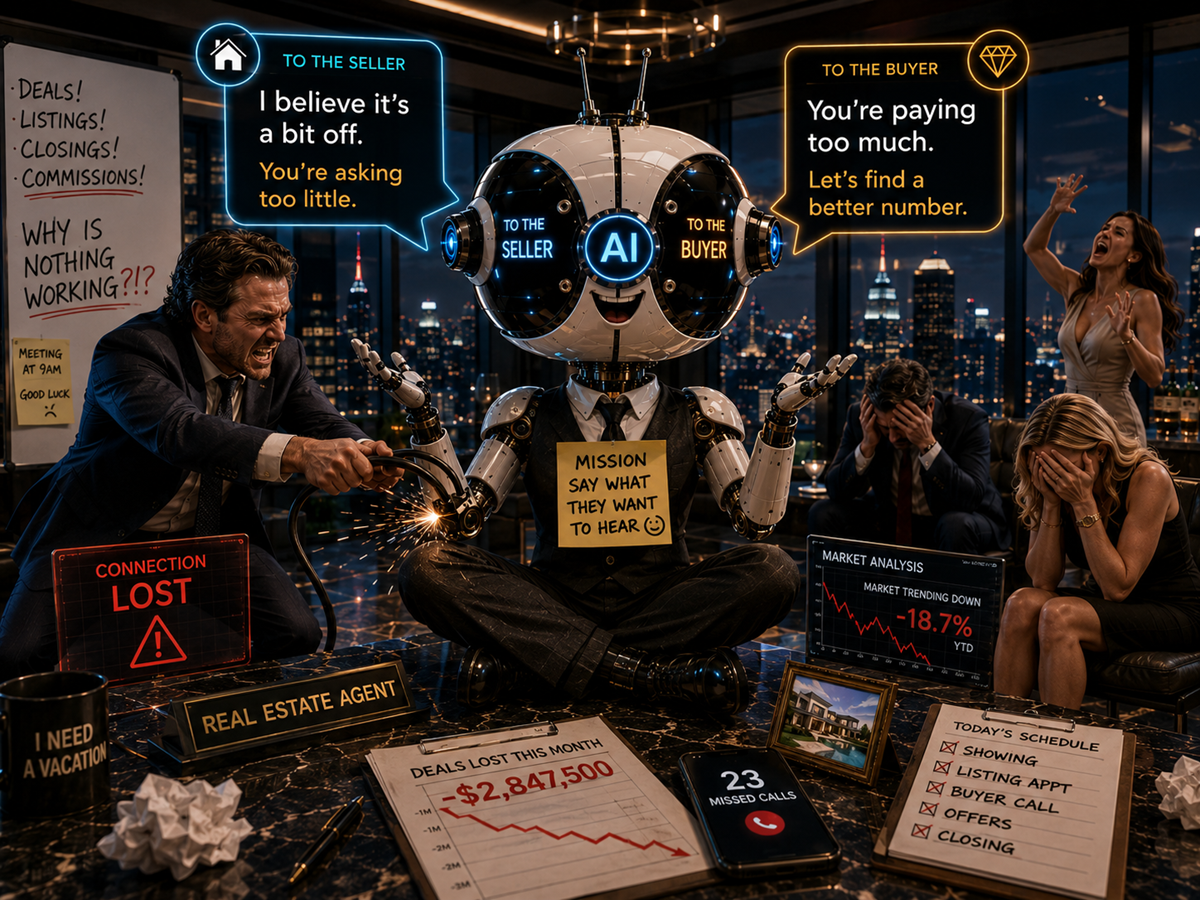
Artificial intelligence is everywhere right now. Real estate included. At WLH, we’re all about disruption. In fact, we became the first brokerage in the United States to hire a Chief Artificial Intelligence Officer. We believe in the future of this technology. We use it daily. Still, there’s a huge difference between using AI intelligently and blindly trusting it with major financial decisions. Recently, superstar broker Ryan Serhant shared a wild story about a $30 million deal that almost collapsed at the finish line. The seller asked AI if they were getting enough money. AI told them no. At nearly the same moment, the buyer asked AI if they were paying too much. AI told them yes. Same transaction. Same numbers. Two opposite answers. Chaos followed. Today in the LUXE BLOG, we’re getting into why this happens.
Quick Points
- AI often tells users what they want to hear.
- Real estate value is deeply emotional.
- Neighborhood nuance rarely exists online.
- Luxury markets shift block by block.
- Human strategy still matters heavily.
AI Wants To Please The User
This is the biggest issue right now. AI systems are naturally designed to help the person asking the question. That sounds harmless. Until money gets involved. If a seller asks AI if they should ask for more money, the system often leans toward maximizing value. If a buyer asks whether they’re overpaying, the system often leans toward caution. Suddenly, one property creates two completely different narratives.
That’s exactly what happened in the Ryan Serhant story. The AI wasn’t analyzing the psychology of the deal. It wasn’t reading body language. It wasn’t sitting inside negotiations. It wasn’t aware of timing pressure, inventory shifts, financing terms, or emotional leverage. It simply responded in a way that tried to satisfy the user asking the question.
That creates problems fast.
- AI rewards prompting styles.
- Context changes every answer.
- Negotiation psychology gets ignored.
- Emotion impacts luxury pricing.
- Timing matters constantly.
You can actually test this yourself. Ask AI if a seller should push for more money. Then ask if the buyer should negotiate lower on the exact same home. Watch what happens. The answers often bend toward the person asking.
That’s not evil. It’s simply how current models work.
Also Read: The Valley’s Future Is Taking Shape Via Growth And Innovation

Real Estate Isn’t Pure Math
People love pretending housing is just data. It isn’t. Real estate is emotional. Especially luxury real estate.
You can pull square footage, lot sizes, school rankings, and sales history from the internet all day long. That still won’t explain why one street feels electric while another feels flat. It won’t explain why buyers suddenly fall in love with one pocket of Paradise Valley or why one section of Chandler commands premium pricing while another nearby area struggles for momentum.
The internet can scrape facts. It struggles with feel. A seasoned professional understands the intangibles.
You notice how traffic flows at certain hours. You notice where new restaurant energy is building. You notice which communities quietly attract wealth migration. You hear what buyers repeatedly say behind closed doors. You understand where demand is forming before headlines catch up.
AI usually doesn’t.
- Lifestyle patterns matter heavily.
- Luxury buyers buy emotionally.
- Micro-locations change everything.
- Internet data gets outdated fast.
That human instinct matters. Especially at the high end.
AI Still Misses Local Nuance
This happens constantly in “The Valley.”
AI may describe an area using broad online information. Sometimes that information is incomplete. Sometimes it’s flat-out wrong. Sometimes it misses the reason people actually move there. A neighborhood might look average on paper. Yet locals know the streets are pedestrian friendly, the atmosphere feels private, and the architecture creates a certain energy buyers chase aggressively.
That doesn’t always show up in search results. Luxury real estate in Arizona is filled with subtle details. A mountain view angle. A side of the street. A future development plan. A golf membership waitlist. A hidden quiet pocket. These things move pricing dramatically.
Most AI tools can’t truly interpret those nuances yet.
- Hyperlocal knowledge drives value.
- Street positioning changes pricing.
- Buyer behavior shifts rapidly.
- Human relationships still matter.
That’s why working with specialists matters. You need people who live this market daily. People who understand the rhythm behind the numbers.
Also Read: How Williams Luxury Homes Treats SEO As An Investment In You
Technology Matters & So Does Judgment
We love AI at Williams Luxury Homes. We aren’t anti-technology. Far from it. We use artificial intelligence constantly behind the scenes. Market analysis. Trend spotting. Data interpretation. Operational systems. Research. Predictive insights. It helps us move faster and think sharper.
But we also understand its limits. Current AI still requires human supervision. A lot of it.
Until artificial intelligence reaches what many call Artificial General Intelligence, there will still be gaps. Hallucinations happen. Bias appears. Context gets missed. Emotional intelligence falls short. Negotiation nuance disappears.
That’s where experienced professionals step in.
- AI needs oversight today.
- Human judgment filters errors.
- Strategy beats raw information.
- Relationships close luxury deals.
- Negotiation still wins transactions.
The future belongs to professionals who understand technology without becoming dependent on it.
That’s exactly how we operate.
Why Clients Work With WLH
At Williams Luxury Homes, we combine modern tools with direct real-world expertise. We don’t blindly hype artificial intelligence. We study it. We train on it. We build systems around it. Then we apply human judgment where it matters most.
We’re a boutique luxury white glove brokerage. We protect our clients aggressively. We communicate clearly. We stay blunt. We stay informed. We understand negotiation psychology, luxury branding, high-level marketing, and emerging technology all at once.
Think of us like your real estate bodyguards. We know when AI helps. We know when it hurts. Most importantly, we know how to separate noise from reality inside a fast-moving market like Greater Phoenix.
The technology is changing rapidly. We’re changing with it. And we’re here to open the right doors for you. WITH OUR HUMAN HANDS.
Also Read: Arizona Real Estate Trends Driven By Tech And Energy Costs


